
Published on Tuesday, December 9, 2025
Access our latest property investment summary by completing the form below.
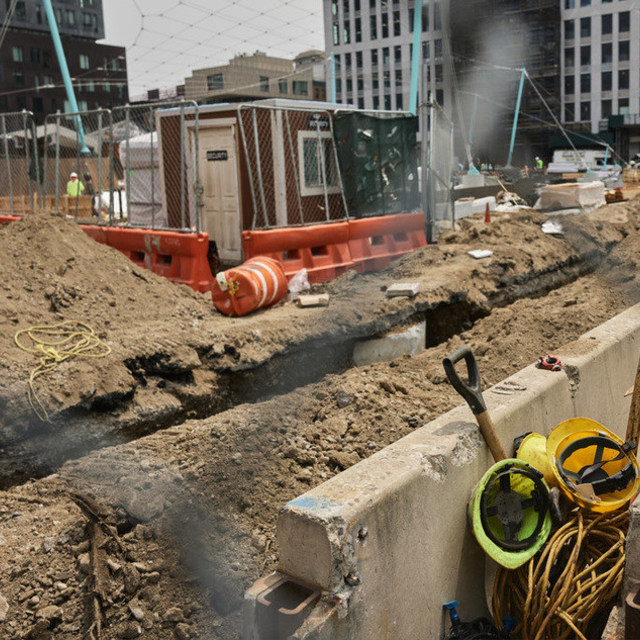
Policy volatility continues to reshape industry economics, "introducing new risks and opportunities," according to JLL.
The CRE industry has been looking for some stability and predictability after the last few years. JLL says that one part of it, construction, is unlikely to get peace or rest in 2026.
The firm’s analysis of CRE stakeholders said that the construction economic shakeups that were products of U.S. policy this year will continue to see “new risks and opportunities that are increasingly central to development decisions.” Project costs, timeline, and market strategies have all felt waves of uncertainty from trade policy and immigration enforcement that will continue to cause delays and holds.
However, there is now enough directional clarity to make strategic decisions, which will depend heavily on asset types and their associated markets.
There are three major contributors to greater complexity. One is the cost pressures from history and policy shifts.
Decisions during 2025 have been difficult enough with the legacy of the pandemic and interest rate changes that have driven up costs over the last six years. A GlobeSt.com analysis of Producer Price Index data over the period shows final construction cost increases of 1.6% in 2020, 5.2% in 2021, 23.1% in 2022, 3.7% in 2023, 1.3% in 2024 and 0.9% in 2025. That translates into compounded growth of 39%. CPI inflation over the same period was 26%.
But there will also be ongoing and increasing impacts of trade policy that will have an impact on cost growth that monetary policy or other actions won’t be able to wholly offset.
Labor shortages from an aging workforce and long-term low entry into the trades have already put heavy constraints on construction projects. Aggressive immigration policies have magnified the existing problems, creating heightened regional and project-level challenges.
“Regional resilience to labor disruptions is varied and critical,” JLL wrote.
Construction employment growth will lag historical rates. Non-residential building was 3.3% in 2024 and is expected to be 0.83% in 2025 and 0.03% in 2026. Residential was 1.73% in 2024 and is projected to drop to 0.93% in 2025 and 0.62% in 2026. Specialty trade was 1.77% last year and is thought to drop to 0.45% this year and 0.1% next year, according to JLL. Heavy and civil was 2.86% in 2024 and could drop to 1.33% in 2025 and 0.06% in 2026.
Construction spending by sector in constant 2023 dollars will be $470 billion for civil engineering in transport and utilities, $710 billion in non-residential building and $860 billion for residential in 2025. Next year, the projected totals are $470 billion for civil engineering, $680 billion for non-residential and $880 billion for residential. By 2027, JLL projects the numbers will rise to $520 billion, $680 billion and $940 billion, respectively.
Macro-level cost driver directions are clear, with trade and labor costs compounding faster than rate relief. Regional and local markets will differ in their responses, however, as some will have strong labor forces while others will need to import help. Supply chain issues will make material costs more complex.
Successful construction in 2026 will need to adopt new project delivery, risk assessment and supply chain management to manage “rapidly evolving local realities," according to JLL.